Green is the new normal : Ways to Heal the MIND BODY And EARTH hashtag#sustainability hashtag#environment hashtag#MakingSustainabilityPersonal Mahindra Lifespace Developers Ltd. Mahindra World City

Friday, April 17, 2020


Tuesday, March 31, 2020

Sunday, July 28, 2013
Traffic count@ Hinjewadi Chowk - Pune
Finally I took some time off to do what I have always wanted to do. I went to Hinjewadi Chowk to count the vehicular traffic. Now you must be wondering why would any one want to do that! Traffic counting is boring and taxing! What would it be used for?
Well at this point, you would have lost interest in this post and moved to another interesting thing to read..for those of you who are still on this post here are the reasons for doing traffic count:
1. We need traffic counts for traffic signal timing
A traffic junction "chowk as it in known in India" has atleast 8 turning movements. In order to plan the signal timing it is important to understand the volume of traffic for each turning movement. This helps us to time the traffic signal accordingly.
2. For assessment of roadside air pollution
Air pollution models need hourly traffic counts to assess the emissions which are then fed in to models to predict the impact of traffic on the pedestrians and people staying in nearby properties/
3. We need traffic counts to plan out required road width
Roads are designed to handle a specific capacity of vehicles. City planners use predicted future traffic data to design roads. However in India it is not unusual for roads to have exceeded their planned capacity.
So with the above reasons, I went for counting the traffic at Hinjewadi Chowk. Here is what is the preliminary conclusions of our count observations:
1. Road capacity had been exceeded causing increase in wait times at signals. 9-10.30 am is the worst time to be caught here. Expect minimum of 20-30 minutes to navigate this patch. At evening 7-8.30 pm is bad.
2. There are equal numbers of two-wheeler and 4 wheelers. Most 4 wheelers have single drivers
3. Impact of polluting gases is on pedestrian and roadside establishments, bus passengers and two wheelers. - One hour at this junction is enough to make your head ache - Usual suspects SOx, NOx, Ozone and PM10 to blame - Detailed air pollution predictive modelling will be required to estimate the actual levels of pollution here.
4. Munipal Buses run in more than full capacity - very few in number.
5. Company Buses are a norm and comprise of more than 80% of the total bus count.
6. Buses and 6 seaters give out visibly bad exhaust gases - PUC not applicable to them :-(
.... its a crazy junction - noise pollution exceeding with car owners incessantly honking so that pedestrians move out! Currently road is full of potholes..so this is pain chowk so to say........Turning movements here are interesting..I will post more interesting points about this in next blog - keep reading......
I haven't seen any study of traffic count or air pollution being done here... if you find any recent study pl let me know.


Monday, January 9, 2012
6 steps for responsible E-waste disposal
Rapid rise of use of electronic and electical goods has also seen a rise of disposal and rapid discarding of the same. End of life is when these goods no longer are of any use to the user. There are various ways we deal with these products after the EOL is reached. Some of them are as observed in India are
Last year three Infoscions decided to come together for a common goal. The goal was to work on the idea - that awareness on responsible E-waste disposal must spread to each and every person using electronic and electrical devices. Thus came to life our initiative called Afterelife - its a kind of reverential treatment to end of life devices. Would invite you all to visit this blogsite and share with all:
Sharing with you simple steps for E-waste disposal for corporates :
Visit: http://afterelife.blogspot.com/2012/01/6-steps-towards-responsible-e-waste.html
You can visit our Facebook page at http://www.facebook.com/Afterelife
Please like our page and send it to as many corporates that you may know of.
Hope you like this post. Your comments are most welcome and will help us get valuable feedback on what you think
- Store it at home till you think you can sell it!
- Pass it on to the less previledged - downtrade
- Trade-in at the store where you buy upgraded item - hope that it may be disposed responsibly !!
- Sell to to the local recycler - illegal stripping and disposal
- Recycle it with authorised recycler - may be the best..but will not yield any monetary returns to the user.
Last year three Infoscions decided to come together for a common goal. The goal was to work on the idea - that awareness on responsible E-waste disposal must spread to each and every person using electronic and electrical devices. Thus came to life our initiative called Afterelife - its a kind of reverential treatment to end of life devices. Would invite you all to visit this blogsite and share with all:
Sharing with you simple steps for E-waste disposal for corporates :
Visit: http://afterelife.blogspot.com/2012/01/6-steps-towards-responsible-e-waste.html
You can visit our Facebook page at http://www.facebook.com/Afterelife
Please like our page and send it to as many corporates that you may know of.
Hope you like this post. Your comments are most welcome and will help us get valuable feedback on what you think
Saturday, December 3, 2011
Serious about Sustainability Solutions? Learn to break the ICE…
Last week I was in New Delhi attending a “Sustainability Solutions” Summit. Organized by Confederation of Indian Industries. Attended by more than 500 participants from wide variety of Industries, academia, government officials and consultants and entrepreneurs and students, the Summit was really an eye opener in many respects as Industry experts and Government officials discussed wide variety of sustainability challenges and possible solutions. Interestingly sustainability is growing strongly in India, and New Delhi is listening and appears to favor sustainable development going forward. In a land where the environmental legislations are rampantly evaded, Indian industry appears to have woken up to the business value of Sustainable development and the need for coming up with sustainability solutions to operate in this challenging vibrant Indian economy. The fact that many Indian companies now have a global footprint, it is becoming increasingly important to embrace sustainable business models in order to sustain. Sustainability is no longer a choice and it is no longer enough to comply. This Summit sought to find enduring solutions to 2 key inter-twined aspects of sustainable growth and development: re-creation of a green economy, and inclusive innovation.
However the key takeaways of the conference as gathered by me, were that sustainability solutions emerge through Innovation, Collaboration and Education which I have coined as the ICE and embracing sustainability involves what could be called as breaking the ICE.
Innovation involves creative thinking and connecting the dots. It involves being aware of consequences of business impacts and the unintended consequences of our actions. What we believe to be a sustainability solution today may have unintended consequences. Did we know that biofuels would create rise in price of corn or biodegradable plastics derived out of palm oil will give rise to unsustainable palm oil exploitation and harm the ecosystem of the orangutan? Innovative business models are those which are sustainable and inclusive and there will be no business in future that can survive if it is not inclusive and sustainable. Going forward all innovation will be sustainable social innovation. Social innovation means thinking about the organization or the business as a part of the society and working together as humans and going with the natural flow of nature. Social innovations are source of well-being and have shared benefits.
Collaboration means listening to each other with empathy and working together. When faced with complex problems of how much we have trashed the earth, which set ways of thinking cannot solve, now we see businesses, governments, customers, competitors all sitting together and putting their heads together to come up with solutions. Collaboration involves building bridges between different kinds of stakeholders and allowing ideas to develop freely. Collaborative platforms like conferences, in person meetings will continue to exist however collaboration is and will be driven by information technology. Forums, social media, IT tools will enable sustainability collaboration and drive stakeholder engagement.
 Education is the key to the realization of innovation and collaboration. In this parlance it is sustainability education and awareness that I am referring to. Making more businesses realize that sustainability is not something that you adopt because it enhances your brand, it is rather necessary to survive in this fiercely competitive, resource crunched environment, and this by itself will be an uphill task. Here again IT tools are and will continue to be widely leveraged.
Breaking the ICE is not easy and education and awareness the key to innovation brought about by collaborative efforts of passionate individuals and businesses. With representatives from GIZ, WWF, CDP, WBCSD, Bureau of Energy Efficiency, and industries like Microsoft, Infosys, ITC Infotech, Tata chemicals, Tata Steel, Vedanta, Petrobas, Rio tinto, ACC Cement, Tata Power, Kirloskar Brothers, and ministers from the Govt of India, and enterpreneurs like Harish Hande from SELCO and thought leader like Gunter Pauli from ZERI this conference proved to be a perfect melting pot for sharing ideas and joining the dots for Sustainability Solutions in the real world.
However the key takeaways of the conference as gathered by me, were that sustainability solutions emerge through Innovation, Collaboration and Education which I have coined as the ICE and embracing sustainability involves what could be called as breaking the ICE.
Innovation involves creative thinking and connecting the dots. It involves being aware of consequences of business impacts and the unintended consequences of our actions. What we believe to be a sustainability solution today may have unintended consequences. Did we know that biofuels would create rise in price of corn or biodegradable plastics derived out of palm oil will give rise to unsustainable palm oil exploitation and harm the ecosystem of the orangutan? Innovative business models are those which are sustainable and inclusive and there will be no business in future that can survive if it is not inclusive and sustainable. Going forward all innovation will be sustainable social innovation. Social innovation means thinking about the organization or the business as a part of the society and working together as humans and going with the natural flow of nature. Social innovations are source of well-being and have shared benefits.
Collaboration means listening to each other with empathy and working together. When faced with complex problems of how much we have trashed the earth, which set ways of thinking cannot solve, now we see businesses, governments, customers, competitors all sitting together and putting their heads together to come up with solutions. Collaboration involves building bridges between different kinds of stakeholders and allowing ideas to develop freely. Collaborative platforms like conferences, in person meetings will continue to exist however collaboration is and will be driven by information technology. Forums, social media, IT tools will enable sustainability collaboration and drive stakeholder engagement.

Breaking the ICE is not easy and education and awareness the key to innovation brought about by collaborative efforts of passionate individuals and businesses. With representatives from GIZ, WWF, CDP, WBCSD, Bureau of Energy Efficiency, and industries like Microsoft, Infosys, ITC Infotech, Tata chemicals, Tata Steel, Vedanta, Petrobas, Rio tinto, ACC Cement, Tata Power, Kirloskar Brothers, and ministers from the Govt of India, and enterpreneurs like Harish Hande from SELCO and thought leader like Gunter Pauli from ZERI this conference proved to be a perfect melting pot for sharing ideas and joining the dots for Sustainability Solutions in the real world.
Saturday, July 16, 2011
Scope 3 - what it means
I posted this on Infosys Sustainable Tomorrow blog - this is a repost:
Children show a clear understanding of what belongs to them and what doesn't. Similarly with carbon emissions, companies are very clear about what emissions are theirs and what are not theirs. Clearly delineated as what is known as scopes we know what they mean in the carbon emissions reporting parlance.
Scope 1: Emissions I own and emit - direct emissions.
Scope 2 and 3: Emissions that are emitted by others due to services and products used by me - Indirect emissions
The drivers for reporting carbon emissions are many, but the biggest driver is regulatory. Legislations like AB32, EPMRR, UKCRC, NGERs all require organisations to report carbon emissions. What is common amongst mandatory reporting is that they all have to report scope 1 emissions. Emissions trading also require trading emissions which companies own i.e Scope 1.
Voluntary reporting registries/protocol ask for scope 1 and scope 2 (indirect emissions reporting due to electricity and district heating and cooling). Reporting scope 3 is optional.
Hence why should I account for Scope 3 at all when there is no requirement to do so by law or by voluntary registries? What is it that is asking companies to take a look at scope 3 emissions?
What has been increasingly observed is that companies are undertaking investigation of all environmental impacts of any given product or service, over its entire life cycle - commonly referred to as Life Cycle Analysis or LCA. While LCA refers to entire gamut of environmental impacts, the LCA of carbon emissions is the carbon footprint of the product or service.
Scope 3 accounting is gaining importance as companies like Walmart, is nudging its suppliers to engage in deeper sustainable practices. Given that accounting for scope 3 emissions is no cake walk, the premise of scope 3 accounting is that we know that we are responsible for more than what we own. Since scope 3 is no cake walk, companies like Coca Cola, and Inuit are seeking help. What is difficult is the amount of data and management of the same. Scope 3 emissions account for the biggest portion of emissions that a company is responsible for. It is here that a company has the largest scope of reducing its emissions, identifying efficiencies in its processes, logistics, and resource and energy consumption.
While I have observed that over the last few years the number of companies participating in voluntary disclosure has increased manifold, the trend to account for all three scopes is something that will be increasingly adopted. Initiated by sustainability leaders, this movement will nudge companies to embark on the journey of finding out relevant long lost relatives, grandparents and uncles and aunts i.e scope 3 emissions accounting, perhaps reflecting a greater sense of belongingness in the family of emissions. Cherry picking of what activities to report in Scope 3 continues. Comprehensive reporting of scope 3 is still no cakewalk. Atleast now we know the importance of Scope 3 reporting as a means to assess inefficiencies in our supply chain.
It may be little difficult for individuals to understand what scope 3 emissions may mean...however Scope 3 comprises of more than 50% of our carbon footprint. It is here that there is a potential to reduce our emissions. Give a thought to what you buy, what you consume daily. All goods and services we consume are our scope 3 emissions. Therefore shop local, buy what you need, and avoid waste and recycle. Weaving these three mantras in your life will help you keep a tab on your scope 3 emissions.
Infrequent postings continue...but I promise the mind is still bubbling with ideas towards a greener you.
Sunday, February 6, 2011
ProjectChirag
I was recently invited as a speaker at a UGC sponsored National conference on Environmental Management and Challenge for Sustainable Development. It was organised by M.D.College Parel, Mumbai. The chief guest at the conference was none other than the Sheriff of Mumbai Dr. Indu Sahani. She is the principal of H.R.College(Commerce and Economics) in Mumbai. Her address to the students was really impressive.
During her speech she gave examples of what sustainable development really means. One example was so exemplary that I felt was itching to share this with you all.
I will recount it in her own words:
"One day, one of my students' comes into my room and switches off the lights/fans and ACs of my room. The student is Jyotirmoy Chatterjee(a.k.a JC). So I asked him, "why are you doing this JC?". He asked me to wait and continued to gaurd the switchboard for 10 minutes. It was becoming unbearable. You can understand in Mumbai heat sitting without AC/fans and light becomes very uncomfortable after some time. So I ask JC, "Tell me JC, are you not scared of coming into the Principal's room and behaving in this fashion?" "No", he says and says that he will not put the turn it back on till after TEN minutes! After 10 long minutes he says, "Mam, I wanted to sensitize you to the problems people in rural India are facing. We cannot bear to have lights off for 10 minutes, but rural India has been in darkness for so long!" Point well driven. Born out of college students and their enthusiasm is Project Chirag - with the mission of lighting up rural India using solar lamps. Each lamp costs approximately Rs. 3500 The students decided that they will not approach rich people for handouts. If a student could forego Rs 10 each day for 365 days(foregoing their bag of chips) each person could raise the money to buy a solar lamp."
In a manner similar to how they sensitized the sheriff, the students removed the tubelights/lamps in the whole college. Their message went right in "hit the nail"! Project Chirag was born!
What does this project have to do with Sustainable Development? These students have lit up an entire village(now more!!) using solar power with their passion, enthusiam and ingenuity. All this without expecting doleouts from people who are rich. Less than 23 years of age, J C is the President of Students in Free Enterprise, HR College (SIFE, HRC). Check out their awesome work at www.projectchirag.com. Their work deals with 5 areas :Environment, Empowerment, Health and Sanitation, Social Upliftment, Education.
I hope this inspires you as well.
Lets take baby steps to becoming Greener. You never know what project could be born out "A Greener You too!"
Wednesday, January 26, 2011
Read only if you identify yourself with the theme..
Too many months have passed and not a single post from me..that is a bad. However I did manage to do one post on Sustainable Tomorrow at Infosys website. For those who like reading my posts please do visit www.infosysblogs.com/Sustainable-Tomorrow. My blog title is Sustainability and Sustainable Tomorrow. I know few of my close friends have actually heaved a sigh of relief not to be asked by me - "have you read my latest post?", but here I am again..though may be I will not spam their mail boxes this time!
Hoping to do more frequent posts. For the time being do visit my post at infy website. Till we meet again ciao
Hoping to do more frequent posts. For the time being do visit my post at infy website. Till we meet again ciao
Sunday, June 6, 2010
Gandhian engineering-A Food for thought
There is a nice saying ..“Life was simpler when "APPLE" and "BLACKBERRY" were just fruits..!!!”. A nice world without the burdening list of “to-dos” and the pinch of schedule. Alas, but life has taken its course, and any man with a dream to fulfill, has to trade the racing path. So the fruits turn into gadgets and the life into a timetable. Everybody wants to claim his pie in this glorious economic growth and leave his mark in the industry.
Even amidst this smog of industrial revolution, there are some visionaries who dream of sustainable future. Working towards “ more from less” motto, and targeting the large mass at the bottom of the pyramid, they follow a mission called “Gandhian engineering”. An eminent scientist and a visionary leader, Dr. Raghunath Mashelkar, threw this idea at the entrepreneurs and he had a large cult following. The core of this initiative is “Science for Solution, Technology for Transformation, Innovation for Impact”. The idea revolves around highest quality of product / service at lowest price. Dr. Mashelkar also gives an immense importance to optimize production processes to reduce waste, promote reuse and recycle. This is the need of the hour.
He quotes very apt example for sustainable future, surprisingly coming from a boy in rural area. Boy says nearly 120 liters of water is consumed to produce one kilogram of vegetables and how it was not sustainable. That is where Gandhian Engineering will begin. The heart of it is sustainability.
Every process is dependent on the raw material, which by god’s grace is abundant at this hour. But stock of metals, oil n gas would soon deplete, and every core process and the digital world that depends on these inputs, will feel the shortage. In the state of abundance, the thrust to recycle and reduce waste takes a backseat. But We cannot go on just consuming. We need to reuse. Recycle.
Dr. Mashelkar quotes C K Prahlad, that our aspirations should always be higher than our resources. If you feel you are resource rich, the aspirations go down, you are on a downhill. So always use resource critically and wisely. The thought provokes the requirement of a “Green initiatives”.
The three major hurdles we see in such initiative, is one lack of awareness, two unavailability of an easy medium to recycle, and third less access to experts for optimizing our processes. We need to start a movement to reach the masses and motivate them to use renewable energy resources, utilize natural resources wisely. The entrepreneurs are already striving to create quality products for less cost, especially in health and consumer sectors to reach the bottom of pyramid in India. What we need to emphasize is to properly handle the end-of-life cycles for these products. The same also need to be propagated to corporate for responsible manufacturing and recycling.
Million dollar question. So how do we contribute in this greater cause. As a miniscule part of this society, do I have power to take on this big challenge? Why not….We are ideating one such movement through the web media, with our technical skills, for the urban masses to start with. We would try to address every possible avenue to work towards the Greener India. We wish to take this movement subsequently to reach every citizen of India and inculcate the habit of responsible usage and engineering. We will like to put in use our technical experience, in-house expertise. We also encourage other volunteers to help in this cause and contribute as per their competence.
As Dr. Mashelkar say, we live on earth on a lease of our lifetime. Some people do some good for humanity, some people do otherwise and some just don’t do anything, they consume and go away. We want to be of the first kind, and contribute towards our Nation.
Saturday, June 5, 2010
World Environment Day June 5th 2010
Today is World Environment Day. Last year I had launched my blog on this day. So A Greener You is 1 year old today. Its time to take stock of where we are.
Environment is our all encompassing natural surrounding. When people study the impact of human activity on the environment we refer to the five elements of the environment : Land, air, water, noise and the biological environment. Any substance introduced by human activity into these 5 environments in quantities that are harmful for humans are termed as pollutants. We humans have rendered our environment polluted to such an extent, that it is beyond the capability of nature of cleanse itself. Humans understand that well - so we devise terms such as mitigation - which means to undo the harm - which is like putting the paste back in the tube!
So when the sustainability movement started - it understood that we have to involve humans and economics to undo the damage on the environment. Environment does not stand alone but when human realise that it is in their favour to not pollute and not use more than required the environment stands to gain by embracing a sustainable lifestyle.
There are many blogs telling you what each one of us should to live greener -a blog of note is maddock douglas - Green innovation blog.
Leverages the human ingenuity to overcome all odds, using innovative minds to tide the wave.
While skeptics still abound wondering what this hulla bulla is all about, it takes gentle coaxing to so that people start to spare atleast a thought to our all encompassing natural environment. Once the thought takes root, we would coax further to turn it into action. Like domino effect the green movement has already taken the world by storm. Business who choose to ignore it will stand to face risk of regulation, litigation and brand value loss. Individuals who choose not to acknowledge or revere the environment will eventually be scorned by a growing section of society who have by choice embraced green lifestyles. It will be realised that we have no other way to live but to live holistic, closer to nature lives.
Do your bit for the environment. Live naturally...and don't tell me what can I do? If you can read and write you already know what you can do.
Remember ABC
A-Awareness
B-Belongingness
C-Caring
Spread the awareness, feel that the earth belongs to you, and care as if it is your own child and do it everyday.
Happy Environment Day.
Saturday, May 22, 2010
How much Green do we need to become?
Green has a become buzz word with everyone talking or doing something about it. Business have started printing Sustainability Reports to show their commitment towards environment and green. So much that some people from my personal circle have quit jobs and have become social entrepreneurs of green activities. Really inspiring.
And above all, there are so many seminars, webinars, podcasts available on green that one cannot be ignorant about our climate and planet. However, what is most interesting to see is that any session you attend on Environment, Green Change, Water prevention etc., there would be a high chance of one speaker who would give example of having bath with one bucket of water or has switched to conventional methods of living. And I have a serious problem with such kind of unwordly remarks. What do they want/expect from common man?
And above all, there are so many seminars, webinars, podcasts available on green that one cannot be ignorant about our climate and planet. However, what is most interesting to see is that any session you attend on Environment, Green Change, Water prevention etc., there would be a high chance of one speaker who would give example of having bath with one bucket of water or has switched to conventional methods of living. And I have a serious problem with such kind of unwordly remarks. What do they want/expect from common man?
- Do they expect us to go back to medival period?
- Do they expect us to think so much green that even while buying basic commodities of home one should look for carbon footprint?
- Do they mean that world which was becoming flat sometime back is getting territorial again? With the fact that buy local to go green and reduce one's carbon footprint.
- Do they expect us that anything with label green is the right choice irrespective of other important parameters to me as an individual?
and so on. The point I am trying to make here is that people should be made aware becuase that is in the common interest for our planet. We have to go green. Period. But how? Has anyone got any clear view on that. There are various means and roles each country and individual needs to play here.
Reduce carbon footprints means what? I have not been able to comprehend the right definition still. Yes, I have read the official definition but when it comes to buying products the one needs to know carbon footprint also covers the emissions from the source. Now, if I am sourcing from China because it gives me manufacturing and product pricing advantage. Shall I not go for it? Purelybecuase it involves the mode of goods transport i.e. air is causing more emissions that does not mean I should start buy locally. There are certain business challenges like speed to market, pricing, quality and service which come into play while a product is being produced.
Basic point: If I am not going to be in business and make profits, will green really matter ?
Yes, I am in agreement that we should be "responsible" and must consider impact on the environment while doing our daily jobs in life. However, just we being responsible will not help becuase we need to use the technology to our advantage to reduce the impact further. We have left behind medival period centuries ago so why quote such examples.
For example : I read about this washing machine which would use just one glass of water and one spoon of powder to wash all the clothes (http://www.xerosltd.com/). Now that's technology in use & behaving responsibly.
Another example: Grohe has come out with showers with Eco-Button which reduce water usage upto 40% (http://www.grome.com/). Not only this they have whole lot of bathroom accessories which can help save water and thus enable us to become more repsonsibly. Rather than asking us to start taking bath with one bucket of water !!!
There are some printing of paper setting which one can see in offices like double sided printing. Absolutely makes sense. Infact, I was reading some days back about some special fonts to be preferred as they use less ink while printing. Another invention in this area is the "Eco-Fonts" (http://www.ecofonts.com/). Awesome ! Mind Blowing !
Having said all this what I have realised is that we need to go green because it is the question of our survival and future of next generations. But we also have to use our common sense as well not just driven by labels proclaiming green and some NGOs coming in with big sponsors to advocate the same.
Sunday, March 7, 2010
My home has a garden and my city my garbage strewn all over the place!
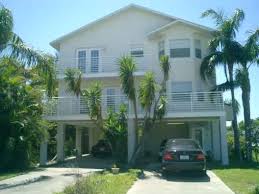
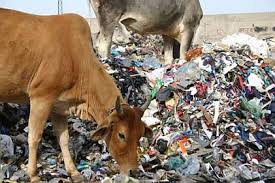
Nothing pains me more than garbage strewn along roads. As if casually by walking past I have dotted my streets with the garbage from my home. It is indeed a very painful thing to walk along streets which smell and look dirty at the same time. We Indians have mastered the art of doing just that! We have amazing resilience to stench and visually disheartening streets. Its the pollution that we are all responsible for but no one feels responsible for it.
I see people of all classes in India with little civic sense. Not that we Indians have no sense of beauty or cleanliness. We are very clean people. We do not venture out without a bath. Our homes are cleaned everyday sometimes twice a day. Air inside our home is purified with burning incense and dhoop sticks. Our homes have neatly kept courtyards, which are swept and sprayed with water (to reduce the air borne dust). Yet our garbage finds its way just outside our homes, as if it is the job of someone else to collect our waste and take it else where. Callousness marks are attitude about garbage. Garbage is considered ‘ashudh’ in hindi i.e unclean. Hence needs to be kept away from our immediate surroundings. Hence our entire cleanliness routine is based on the above. When we are within our homes, everything is neat and clean, but just outside lies our own garbage, that is so paradoxical. Hence Indians ensure that they clean their feet when they come back from a visit outside their homes. The outside shoes are not worn inside the house and vice-versa. We do not consider our cities as our own homes, we Indians are pretty selfish in this respect. It is painful however to even acknowledge this fact. We are so paranoid about garbage that we cannot bear to hold even a small piece of Lays packet that our child has eaten outside. We discard the piece as if it is so heavy that it cannot be carried with us to be disposed properly.
The fact that waste management is the least in the minds of people is borne testimony by the fact that no thought is given to waste management while designing even the best of buildings. India Inc. has no time or thought for garbage. Waste is always an afterthought to be handled when it arises. To be dumped into land without a thought. Hopefully things are changing and builders and town planners are giving thought to waste management.
Municipalities struggle with keeping the cities clean and waste collected is often burned (contributing to air pollution and toxic fumes and GHG gas emissions). Where the west differs from the Indian thought process is that they consider their towns to be their own. Hence everything is clean, homes as well as their towns. There is no distinction in which shoes are to be worn inside the house or outside.
Its time Indians change their perception towards garbage and give thought to proper and thoughtful disposal of waste.
For those who are not aware our country has waste management handling and disposal rules which were passed in 2000.
There are fines spelled out for littering and improper disposal of waste. However these are not strictly imposed anywhere in the country. There are however few states in India which have done a good job of waste management. One of them is Goa.
There is a lot of technology available to handle and manage waste. Only will and people’s cooperation will ensure that we clean up our towns and cities. I wonder why we feel insulted when Mumbai was shown as a dirty pigsty in Slumdog Millionare. It is the truth and its time we accept it. Acceptance that we Indians love to litter and that this litter bug tendency transcends all classes.
Just like my domestic help puts it “why should I bother when everyone else does the same thing”. Like a goldfish I looked at her…wondering what could be done to increase the levels of awareness amongst one and all. Just the other day I took my soon to a store and got him a box of chocolates. Two other kids bought the same thing. Within minutes the chocolates were devoured. My son held onto his box and showed me the other two on the shop floor carelessly thrown by the kids(their parents were with them neither set of parents told their child not to litter). I was appalled, the shopkeeper smiled and said people do it all the time. Never mind, garbage is just a small thing…Indians just don’t have time for garbage! Truly Indians live in beautiful homes and dirty cities.
Watch this wonderful film by Parasher Barua. It deals with the lives of people in Dharavi who recycle waste thrown away by us. Dharavi recycling is an unaided, enterprise by the ever resourceful people of Dharavi.

Sunday, February 28, 2010
Leading the way-Wegmans
I am writing after a long gap. I was caught in the flow of events that relates to a move. I moved from New Jersey to India. Just before leaving I went to Wegman’s in Woodbridge to get a jar of organic peanut butter (store brand).
Wegmans used to be and is still is my most favored supermarket in Woodbridge. And the reasons for it being my favorite is much more than just what is available in the store. It has a commitment towards sustainability and towards the local Woodbridge Community. I used my last visit to speak with Ashley Aspres who showcased Wegmans’ commitment towards sustainability.
Wegmans has a line of great organic products which are:
1. Free from pesticides and fertilizers
2. No artificial ingredients
3. No hormones and antibiotics.
Wegmans sources its products from New Jersey and nearby areas thereby supporting local farmers. Check out their Jersey fresh fruits and vegetables. Check out their locally sourced orchids.
One visit to the seafood section shows their commitment to sustainable fish farming. What is special about their shrimps? or all the seafood at Wegmans?
“We encourage suppliers to adopt farming standards that reduce the negative impacts on local wildlife and ecosystems and minimize or eliminate the use of wild fish in the feed, pesticides, and antibiotics.
When appropriate, we work with organizations (such as the Environmental Defense Fund) that specialize in understanding the intricate challenges surrounding farm-raised seafood.”
“We will only work with wild-caught seafood suppliers that have been certified (such as by the Marine Stewardship Council) to acquire seafood that is caught responsibly and prevents the depletion of natural resources. If we find that a better alternative is not available, that item will be removed from our selection.”
Wegmans has put in tremendous amount of effort to rethink about what it is offering to its customers. Its caring attitude towards environment and its customers is endearing.
Wegmans started selling reusable plastic bags since 2007. One reusable bag eliminates the use of several plastic bag. Wegmans also accepts used plastic bags which can be recycled into other plastic products. It has tied up with the Woodbridge township waste management department to enhance its waste management program.
I feel happy to see their efforts. In future, Wegmans will use their commitment towards environment to further influence their supply chain to embrace sustainable practices.
I hope in future Wegmans would introduce many more initiatives which are environmentally friendly. At Wegmans they are always “all ears” to suggestions from its customers. Ask for drop offs for plastic fives(Gimme5). Ask for reduction in packaging. Check out their sustainability page at www.wegmans.com and happy shopping.
Acknowledgement:
Jason Wadworth (Sustainability Coordinator at Wegmans)
John Cortina (Service Manager at Woodbridge)
Ashley Aspres for showcasing Wegmans sustainability efforts and walking me through the stores showing their different product lines.
Monday, November 30, 2009
What are Green House Gas (GHG) emissions?
With Copenhagen round the corner and the world is waiting with baited breath regarding the outcome of the conference – its time to acquaint ourselves with GHG emissions.
With plenty of literature on estimation of carbon footprint, green house gas emissions, people are bombarded with climate change jargon. However the basics are unclear in minds of many. Many people have yet to grasp how they are responsible for GHG emissions. Simply put green house gases are mainly CO2, CH4, N2O, and other halogenated carbon group gases. These gases are produced as a result of burning of fuels or generated as a result of chemical processes. The question arises in our minds is that apart from the 2/4 wheeler I do not burn any fuel….then how can I be responsible for other emissions. If I stop using my car, then will I be not responsible for any emissions..isn’t it??
Energy is required for work that is performed by humans. Energy is obtained mainly by burning of fossil fuels – the other sources being energy is solar, wind, geothermal, hydro, and nuclear. Every action performed in our daily life generates green house gases in two ways directly or indirectly. Direct emission are as a result of burning fuels which at sources owned by you – for example – your car. Indirect emissions are a result of emission produced by sources which are not owned by you – for example emissions as a result of use of electricity or use of products which generate emissions at source, during transportation etc.
So now, it will start seeping in that, anything I do on this earth which uses a wee bit of energy, I will be responsible for anthropogenic (man-made) carbon emissions.
Then how on earth are nations all over the world thinking about reducing the manmade CO2 emissions and curbing it at a level which will limit the heating of the earth’s atmosphere? Curbing CO2 emissions will mainly through rethinking of our current sources of energy and concentrating on using renewable sources of energy, improved energy efficiency. The other aspect is that of find ways to remove GHG gases from the atmosphere(in the form of carbon sinks, carbon reservoirs etc).
Now that you know how each one of us is responsible, you can make a difference through your green efforts. Each green action will translate into carbon emissions avoided.
Hope this post has helped in understanding the hulabaloo about GHG emissions!
CIAO till the next post
Sunita
Friday, November 13, 2009
CFLs in India and why I am worried…
In my last post on CFLs my readers would note my optimistic pitch and tinged with a bit a caution regarding how CFLs should be disposed. One should note that when something new is introduced in the US or EU or Australia a lot of strategic thinking and planning is put in place. In this case introduction of CFLs being backed by outreach(in my view not sufficient enough) regarding its benefits and also how to dispose them at the end of their lifecycle. It is important that CFLs are kept out of landfills or trashcans due to the mercury component in them. In US several stores like IKEA, Home Depot take back used CFLs. Recycling centers also take back CFLs.
CFLs in India however is another story. Let me explain – I am not against CFLs. Do use them in your homes..but can the thrifty Indian be warned enough that please avoid cheap ones. They do not last and break easily. In India CFLs have penetrated the poorer sectors as well. The transition for them has been from no light to CFLs. CFLs can run on batteries and hence in many rural areas it allows them to be off-grid(thru use of solar panels). It worries me that people are not sufficiently aware that what to do with a bulb at the end of its life. It worries me that there is no safe disposal system for recycling of CFLs in India. A recent article from Toxic Alert highlights this concern. Greenpeace in India has led several campaigns highlighting the effects of mercury release from these bulbs. As a result of the bad press that CFLs have received the pro-CFL lobby in India went on to show that the amount of mercury to be released due to CFLs will be miniscule as compared to the emissions of mercury from coal production. People in India somehow miss the whole point I guess. The focus should be on safe use of CFLs and safe disposal!
I am aware of hazardous waste management facilities run by RAMKY in the country do accept CFLs. Municipalities, townships, village representatives should be made aware of disposal of hazardous waste. A CSE report on CFLs in India clearly highlights the regulatory and management issues for a successful CFL program in the country(Study published in Down To Earth (January 15-
31, 2009).
As highlighted by the CSE study the way forward is
• Existing recycling facilities at manufacturing sites must be
made available so that CFLs can be recycled even before
the government mechanism is put in place
• Cost of disposal must be part of the cost of the CFL
• A system must involve buy back of burned out CFLs
At present – the least you can do -
1. Buy your bulbs from reliable sources (marked by BIS)
2. If a CFL breaks in your home, be sure to disperse the harmful vapors by opening a window prior to cleaning up the pieces. Sweep up the fragments, taking care not to touch them with your hands and place the pieces in a sealed plastic bag for disposal. Be sure to wipe the area where the breakage occurred to make sure all fragments are removed.
3. Ask your township for a recycling of these bulbs.
4. Ask your dealer to will take back used bulbs or bulbs which fuse within a year.
Bye for now….
Do send your comments, concerns and forward this post.
CIAO..
Sunita
Monday, November 9, 2009
CFLs are here to stay!

Hi folks – writing a new post after a month. The old tungsten filament bulbs will soon be obsolete as the compact fluorescent lamps(CFLs) are here to stay. World over we have seen a rapid change of normal light bulbs to CFLs. This is a good change since we are talking about energy and money savings. To most people talking in terms of reductions in CO2 emissions do not make sense. What makes sense is talking in terms of savings in terms of money.
A CFL bulb uses up to 75% less energy than old fashioned bulbs. Every bulb changed means reduced demand for electricity which means lesser CO2 emissions, lower pollution, lower costs. That means cleaner healthier air, environmental and public health benefits. Each CFL lasts about 7 years. If every household in America replaced just one light bulb with Energy Star – qualified CFL, the reduction in CO2 emissions would be like taking 800,000 cars off American roads(www.energystar.gov). Through the ambitious Project Porchlight’s endeavors this could be a reality.
I first saw these bulbs in IKEA London way back in 2000. My small studio apartment in London had only a three light fixtures. I changed them all. Electricity is costly in UK. My monthly energy bill plummeted drastically due to use of CFLs. When I came to US and saw the wasteful light fixtures I was a bit amazed! Land of plenty it is! Also the fact that electricity is cheap in US as compared to Europe or Asia – makes people residing here less inclined to make any changes in this regard. But all this is changing slowly yet steadily. So CFLs have made way into our homes and are lighting up are lives.
Excited about the wonders of the new light many of us would not know what to do with the CFL after it is spent. Many of the fixtures we use today such as fluorescent and high-intensity discharge (HID) lamps contain mercury and ballasts that contain PCB can be hazardous. Due to the trace amount of mercury the end of the life safe disposal is of concern. What happens to your old lighting fixtures when you buy new ones? They are probably trashed but it might not be the correct way of disposing of them. There are federal regulations on the disposal of ballasts and lamps in US and EU.
LAMPS: Mercury is a very deadly element when in contact at very high levels. All fluorescent and High-intensity discharge (HID) lamps contain small amounts of mercury. This amount may not affect your health but still needs to be disposed of correctly so the mercury will not accumulate. Just to be on the safe side it is better to consider all lamping waste to be hazardous.
This means that they have to be recycled or taken to a hazardous waste landfill. When these lamps are recycled they are smashed and the mercury is taken out; then the other parts of the lamp are reused.
There are some new developments in lamps that have lower mercury content that are approved by the EPA (Environmental Protection Agency) and is safe to dispose of as solid waste but regulations in each state are different so be sure to check.
BALLASTS: If your old ballasts does not have a label stating "NO PCBs" then it does not contain PCB. Prior to 1979 all ballasts made in the U.S. contained PCBs.
If there's a Home Depot store in your city or town, you can simply drop your used CFL bulbs off at the store for safe recycling, free of charge.
Also check out www.earth911.org for the same.
For more information about compact fluorescent bulbs, visit http://www.energystar.gov/cfls
For more information about compact fluorescent bulbs and mercury, visit http://www.energystar.gov/mercury
So much for now, till the next post CIAO!
Wednesday, September 30, 2009
Woodbridge River Watch
Do you know that Woodbridge township has a green oasis? How many are aware of the existence of Woodbridge River and 97 acres of tranquil forest in the township of Woodbridge? If you are a resident of Woodbridge and happen to be in Omar Avenue – you will be able to see the wooded area. A wooded area in Woodbridge?
Surprised? I bet!

Way back in 1988 a group of six individuals of the township formed a small organization called the Woodbridge River Watch. The group grew in strength to about a 100 volunteers at one time. Several enthusiastic clean-ups were undertaken and you won’t believe the things that they pulled out from the Woodbridge river! Tires, shopping carts, bottles, cans amongst endless other things!
The WRW has shown that what a group of dedicated people can do to conserve the natural resources even in an urban environment. The Woodbridge township has recognized the efforts of the group and has allocated $15,000 to have engineers delineate the wetlands.
The objective of Woodbridge River Watch:
Cleanup and Restore all waterways in Woodbridge Township
Provide passive (natural state) recreational areas, such as:
- Nature Trails
- Canoe Launch sites & rest areas
- Bird Watching Stands
- Animal Refuges

Latest activity by the group is the butterfly garden @Omar Avenue. Work in the butterfly garden started last year.

Thanks to the dedicated members of the WRW group and volunteers the waterways have been restored largely. More work needs to be done for which volunteers are required. The forthcoming cleanup has been planned for 24th of October 2009 (rain date 31st of October). Please visit the organization website for contact information. We need to ensure that the work of all the senior members of the group is carried on by the younger generation.
So pass this post to as many Woodbridge residents you know – As for me I am amazed by the spirit of the group and each meeting inspires me to do more than what is required for our earth.
“Take up one idea. Make that one idea your life - think of it, dream of it, live on idea. Let the brain, muscles, nerves, every part of your body, be full of that idea, and just leave every other idea alone. This is the way to success." Swami Vivekanand
The work by the group shows just that! They never fail to inspire me!
CIAO – till the next post!
Friday, September 18, 2009
Car-less in Mumbai, London and New Jersey


Hi – To all my readers who have been following my blog(I presume – they have been ;-) ) I have a bit of news.
I had an accident on Wednesday. No one was injured – my son was with me and I was unnerved that’s all. Or that’s what I thought! Anyways what has a car accident to do with a green lifestyle?
No - I am not car-less trying to reduce my carbon footprint. I am car-less because the left blinker is not working you see. The whole thing will take about a week to fix. Till that time – I am car-less.
Well, given a chance I would like to live car-less. Two legs, bike or a scooty(fuel efficient and/or preferably battery operated) is my kind of vehicle.
The pedestrian and the vehicle drivers are not mutually exclusive groups. Each one of us is one or the other in course of our daily lives. But it is the human tendency to assume a sense of power depending upon the vehicle we are driving. Hence in the human mind – owning a car is empowering, physically as it allows us to travel further and socially as it tells the society about our buying power.
I came to Bombay from Nagpur(I biked and rode a two wheeler in Nagpur). The first thing I felt in the first couple of days is the amount of walking I was doing in Mumbai. I have lived in Mumbai for several years without a car. I lived in IIT Powai campus which is pretty and very much walkable (i.e if you are not bothered by stray dogs and the late night visitors – panthers) and I would venture out at the most to the shops just outside the campus. Most of my shopping needs were met within a radius of 5 km of my place of residence. Mumbai offers the carless many means of travelling – mostly the city offers the option of bus, train and three wheeler autos and taxis. Not all modes are the best of the world – but they work, they handle endless crowd and somehow the chaotic system manages to take people effectively from point A to point B. Not the best of roads or footpaths to walk on though..but people walk anyways. Many times hordes of pedestrians cross the roads together and bring the road traffic to a halt. What hits me is the absence of safe pedestrian crossing. Pedestrians in Mumbai also do one more thing – they take the path of least resistance. For example hordes of people just get down from a train and cross the tracks together. Often you may find a big opening in a wall between the tracks and the road on the other side – you see path of least resistance. In India the term pedestrian often is synonymous to the common man or the poorer people. As smaller cars are becoming more accessible more and more Indians are moving on and acquiring that ultimate dream of owning a car. Urban planners need to cater to the needs of the pedestrian in the developing countries. Often this segment is neglected as we move on trying to emulate the west – more highways and freeways..enough to deter anyone even daring to cross them – example the western and eastern expressways. In India pedestrians often cross wherever they feel like…not where they are supposed to. On a busy road one many times can see a person whizzing past. That’s how one has to cross a road in India – superfast. Why – one may ask? think and let me know. And the pedestrian mind you can be inconsiderate too – whizzing past at the cost of the bewildered car driver! One thing though..without a car one does not feel helpless in Mumbai.
Many places in India you will see pedestrians walking on the road and not on the footpaths even where they exist. What is so disheartening to see is that – municipalities spend time and money building footpaths..but height of the raised footpath – is almost a foot high. The design of the footpath has no allowance for people walking with prams or the like. Enough to deter old people or people with leg problems off the footpath. Often, open drains on footpaths and vendors or squatters hogging space deter people off the footpath.
After Mumbai, walking in London felt wonderful. Lived in London for 4 years. Not once did I feel the need to buy or own a car. For me, if I were to compare Mumbai and London – London to me is a walking heaven. One can walk really here. For the first time in my life I saw these quaint little buttons on poles near crossings. These are the pedestrian cross buttons. When I went back to visit India I told people about such buttons. One person said to me, “You mean the traffic actually stops because one person wanted to cross the road?”. “Yes it does”, I replied. London also has a very effective bus, train and tube service which makes walkability practically a cakewalk. I walked to my hearts content. I did not visit a gym during the course of 4 years of my stay there. Many European cities I have noted have infrastructure which support walkability.
The US is completely different story. For the first time in my life I felt utterly helpless, hopeless and useless. Initially I didn't have a license nor a car. When my son fell sick I put him in a pram and walked him to the doctor’s office. The footpath suddenly vanished and I was contemplating how to cross the big road. You wouldn’t want to know the frustration I felt that day. Everything here is driven by the auto industry and insurance. Living without a car can be pretty tough, especially here, where public transportation is frequently lacking and where questionable urban planning has caused the average person to live far away from workplaces, schools, and markets.
That said, it's certainly possible, as long as you're willing to change your lifestyle. Many townships(Woodbridge for instance) have identified that the issues surrounding air pollution, green house gas emissions and walkablity, sustainability are all interlinked. A lot of thought need to be put into making neighborhoods sustainable.
Improving walkability could translate into :
1. Thriving local economy – walkers tend to stop more at local stores
2. Reducing carbon dioxide emission(33% of all US CO2 emissions come from cars)
3. Reducing air pollution (common criteria air pollutants from cars are PM, NOx, CO)
4. Healthier population – walking each day for 30 minutes..everyone knows it is good for you.
5. Curb unnecessary expenditure (in other words help lead a more austere lifestyle) since without the car, one would not visit far flung shops or malls!
Here are a few links : http://www.walkscore.com/
Calculate your carbon emissions due to your car – at http://www.epa.gov/climatechange/emissions/ind_calculator.html
Read about : The global walkability index :TALK THE WALK AND WALK THE TALK
Sunita
Wednesday, September 16, 2009
Why Buy Local?
To all my readers – as you know I have been keenly following the green initiatives of the township of Woodbridge as I am a resident of this township. Woodbridge comprises of the following communities.
- Avenel
- Colonia
- Fords
- Hopelawn
- Iselin
- Keasbey
- Menlo Park Terrace
- Port Reading
- Sewaren
- Woodbridge Proper
The Township has announced “Buy & Shop Local” and the “Green Business Recognition” initiative. According to Caroline Ehrlich, Chief of Staff and architect of the “Sustainable Woodbridge” initiative, the “Buy & Shop Local” initiative – part of “Greenable Woodbridge” – is geared to encourage Township residents and consumers to support locally owned, independent businesses that provide unique services and commodities to the community.
“Buy Local” contributes to the overall Township economy, maintains the character of the community and provides continuing opportunities for local entrepreneurs and businesses by building economic strength throughout the Township. “Buy Local” also encourages environmental conservation by reducing travel and fuel consumption and advances health and wellness by allowing residents to walk to local merchants and stores for all their shopping needs.
The township has announced A BUY LOCAL CHALLENGE which challenges residents, shoppers and consumers to shop locally the week of September 20-27.
For a resident the first and foremost question that would arise to meet this challenge is to know what are the local businesses in their area. FREE on-line business listing in the WOODBRIDGE TOWNSHIP BUY LOCAL directory is up at the Woodbridge Township web page( www.twp.woodbridge.nj.us)
One can think of buying local in terms of concentric circles. For example – for your food requirements – local starts with growing your own food, the next concentric ring is local farm, next farmer’s market, next state run grocery food chain, next might be nationwide grocery chain.
People should be aware that buying local need not imply that goods you buy are organic produce or sustainable. For that “buy local” and “green businesses” have to run in tandem. What buy local does is supports the local economy and help save fuel. For more information refer to the Top Ten reasons to Think Local - Buy Local - Be Local. Also take a minute off your time to see what the main street of your town looks like. You might find an interesting cafe or restaurant with a lot of character. Our car dependency hampers exploration by foot and robs us of exploring a town – stopping at will at a local store when you are passing by. The next in line of efforts from the township – should be making the main streets walkable and pedestrian friendly.
So to all residents of the township – do your part in helping the local economy – try and meet the challenge of shopping locally – at least during the week of September 20-27 2009. Pass on the message to all people the residents of Woodbridge.
Till you hear from me again – Happy Shopping.
BWT – when you visit the Woodbridge YMCA – pick up coupons – @ ‘Your Passport to Woodbridge’ in the entrance lobby.
Saturday, September 12, 2009
Still no bottled water for me!
My last post on bottled water had generated a lot of interest. This is a follow up post on the same subject. I got a bunch of interesting comments from my readers. For those who could not post their comment..I have fixed that.
Would like to share this video with all my blog readers :

Seen enough I guess?
I was scouting for options to carry water without using glass or plastic and we recently acquired this bottle from SIGG. The other bottle which we got was from Klean Kanteen. If you are in North America or Europe – these would be viable options for you. However these are good value for money. And there are others like EcoCanteen too.


Developing nations may still not have these options – I would expect people to put their heads together to come up options to make portable water bottles with copper, steel and glass(something like capped beer bottles?) – anything but plastic…and I would probably even look for light weight aluminum bottles.
I did find good portable steel flasks to carry water in India – even the old fashioned glass flasks are options – though these break very easily. Water kept in copper containers are supposed to be good for health – and I have seen them at my mom’s place and store water in one myself here in US. But these might not be good options in local travel as compared to the stainless steel bottle below. This makes me nostalgic of the times when we would carry water in earthen pots for long distance train travels.


People in India please read the report by CSE on the occurrence of pesticide in bottled water. The only company that did not have any traces of pesticides was Evian – which is bottled in France – why the hell did they choose to transport it to India for sale…no market in France? What about GHG emissions associated with all their operations – never mind..my head is aching!
Why would people prefer bottle water even if they are aware that bottled water is the single largest marketing gimmick by private companies?
I had posted my post on the "Climate Change- I care" group in linked and it ended up being a lively discussion. I am reporting it say it went - their arguments in quotes and mine without.
From Netherlands Saskia wrote, “The water company in Southern Limburg Netherlands has great difficulty in getting tap water clean. Especially antibiotics and medicines are difficult. This is a problem in the US too.”
I understand that antibiotics and medicines are difficult to remove from water...strict regulations to ensure the safe disposal of these hazardous wastes - so that they do not enter the water cycle - must be put in place. US EPA is working towards that....I will highlight that in my next post. In fact if bottled water is many times tap water bottled - i would not be surprised tests show traces of antibiotics in them.
Marcio Rossa from London says, “In lots of countries bottled water is a means of survival and the tap water is undrinkable.”
Poor people in these countries many times do not have access to clean water at times and no means by bottles water is my response to the above argument. Bottled water is a luxury which many people cannot afford.
Marcio continues, “Bottle water is like wine or other drink. Different countries and different regions in the same country have different types of water due to chemical components in the rocks, etc.
I do have a preference for a certain type of water. A taste I prefer or a more adequate type of water, adjusted to my health. Saying that banning bottled water is the best... hum, would make me very sad. I think I would stop drinking water all together, so being obliged to buy juices, then get fat and with diabetes because they have about 40% sugar, etc.
And believe me, I would never drink water from the Victorian pipes of London... They are very old!... if bacteria survive in extreme basic and acid (ph) environments, don't tell me that the 'treated' waters of London (where I study) are safe. The river Thames looks very dirty to me!
In Portugal, where I'm from, bottled water is a big industry. It is collected where the spring is being less processed, transformed, or whatever we want to call it.
Of course I do care about the poor countries and the people that have no money to buy water. I do care a lot, but is not by stopping (what we call) developed countries having their water that they will be happier! we need to find solutions and maybe exporting (traded or not) bottled water might be the only solution. That we know is not.”
We are not away from wars for which water is gonna be the cause :("
From Saskia again
“I am secretly happy to hear that you pay more for water than for gasoline. As gasoline is soooo cheap over there... The prices in the Netherlands with special taxes on gasoline are terrible... but good for reducing CO2 emissions.
Sunita, how do you propose strict regulation on keeping antibiotics an medicine out of the water? Its in feaces and urine... that's the problem. We can hardly forbid people to use their restroom/loos!? When the toilet is flushed it comes into the water cycle, also with closed sewer systems as we have throughout the Netherlands.”
My response to the above two :
I have mentioned that incase you have to drink water from reliable sources and which come under the category of bottled water - you could use 3 - 5 gallons refillable, reusable, recyclable bottles - which can be returned back to the water supplier in lieu of newly filled water containers.
I too am worried about the antibiotics and medicines in water - however treated STP water is many times not recycled back into the city water distribution system - let me know if I am wrong..
Rain water harvesting, storage and use - is a good area for homeowners to investigate.
Also one have to weigh what poses a greater health threat - BPA or traces of antibiotics in water.
I have lived in London for several years - totally agree - that the Thames is dirty..no doubt...but it used to be dirtier believe me it was the sewage carrier for the city of London..now it is much better.
The source of drinking water in London are the lakes - I have drunk tap water - filtered using Brita - and not fallen sick any time during my several years of stay in London.
We would definitely not want to add to the burden of disasters – water supplied by tankers and filled in containers by affected people is often practiced in countries like India in times of nature afflicted disasters. – But what works for some countries might not be true for other countries – we all tend to follow one rule in life diligently – we follow path of least resistance – we all do what is the easiest and most convenient for us!
For such events we could think of bottles made of Taterware and Novomer. http://www.bdfs.net/products/TaterWare/
Novomer is a company that makes plastics from CO2. SO no oil, and it helps reduce CO2; sounds too good to be true. http://www.novomer.com/
Did you know that offering water in glass bottles is becoming a gourmet thing in restaurants! Its a shame…at present there is no single company that is offering water in a glass bottle – though beer a very popular drink is routinely sold in one.
Enough on bottled water I guess. As you can see there are two sides of a coin - but the environmental impact of plastic bottles far outweigh any other concerns. We have a long way to go! CIAO till the next post...will do more on water pollution and how you can be involved.
Subscribe to:
Posts (Atom)